Hygiene · 6 min read
Why Your Helmet Still Smells After Cleaning
Why Does Your Helmet Still Smell Bad Even After You Clean It?
31 Oct 2026
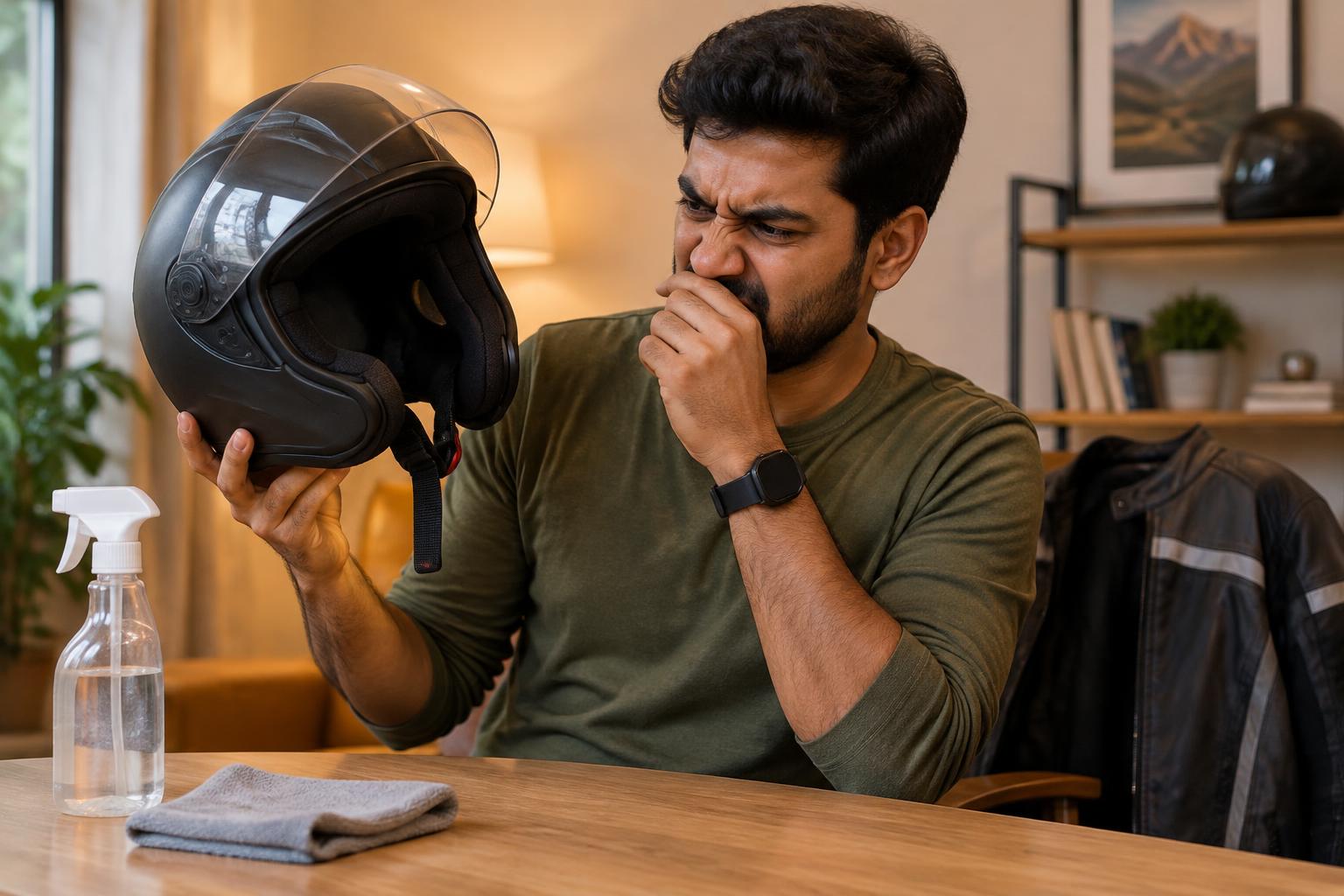
You've cleaned your helmet.
You wiped the shell, sprayed something that smells suspiciously like an expensive car freshener, and left it out for a while.
For a glorious few hours, everything seemed fine.
Then you put it on again.
And there it is.
That unmistakable smell.
At this point, your helmet seems to have developed its own personality, and unfortunately, it isn't a pleasant one.
So why does helmet odour keep coming back?
The answer involves a little chemistry, some microbiology and a surprisingly important step that many riders skip.
Why Do Motorcycle Helmets Develop a Bad Smell?
Helmet odour can develop when sweat, skin oils and microorganisms interact with fabric padding. The resulting odour-producing compounds may remain in the liner, particularly when cleaning and drying are incomplete.
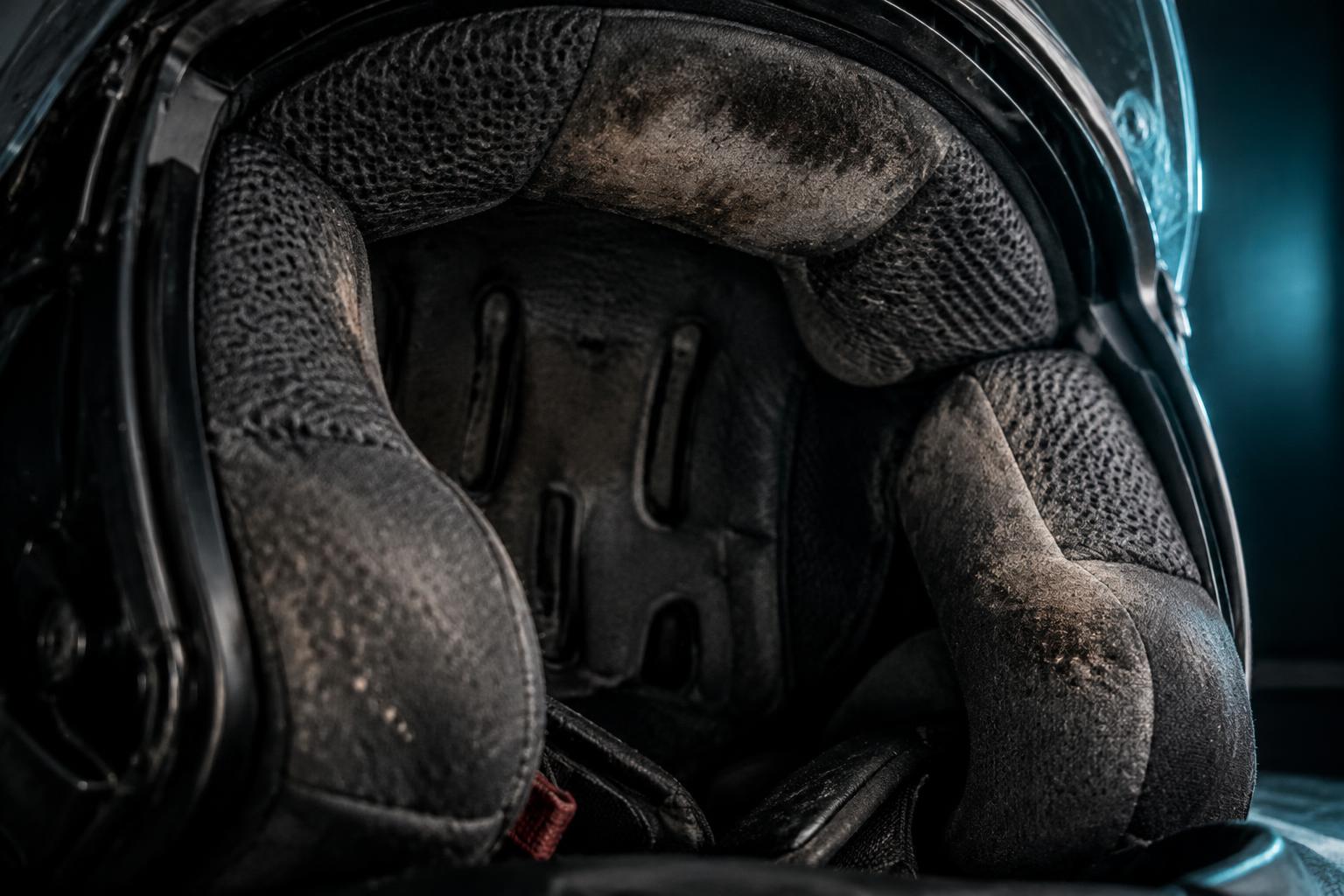
Your helmet's comfort liner sits close to your scalp and face.
During regular use, it comes into contact with perspiration, natural skin oils and other residues.
Over time, some of these substances can accumulate within the fabric.
A 2023 review published in the scientific journal iScience examined how sweat, skin microorganisms and textile properties influence odour formation.
The researchers explained that worn fabrics can develop unpleasant smells through interactions involving perspiration and microorganisms.
While the review focuses on sportswear, the underlying principles are relevant to helmet padding, which also spends considerable time against the skin.
Plot Twist: Sweat Isn't the Only Culprit
We tend to blame sweat for every unpleasant smell associated with clothing and equipment.
But the story is more complicated.
Sweat contains water and various dissolved substances.
Skin microorganisms can interact with compounds found in sweat and skin oils, producing volatile molecules that contribute to body odour.
Some of these compounds can remain associated with fabrics.
The fabric itself matters too.
Research published in the International Journal of Hygiene and Environmental Health found that different textile materials supported different patterns of bacterial colonisation.
This doesn't mean one particular helmet liner is automatically unhygienic.
It means material composition can influence how microorganisms interact with fabric.
And that brings us to an important point.
A helmet that smells bad isn't necessarily dangerous, and a helmet that smells pleasant isn't necessarily clean.
Your nose is useful, but it isn't a microbiology laboratory.
Why Does the Smell Return After Cleaning?
There are several possible reasons.
1. You Cleaned the Surface, Not the Padding
Wiping the exterior removes visible dirt.
Unfortunately, it doesn't do much for sweat and oils absorbed by the interior comfort liner.
The shell may look spotless while the padding still needs attention.
It's the helmet equivalent of washing your shoes without ever cleaning the insoles.
2. The Helmet Wasn't Completely Dry
This is a common oversight.
You wash the padding, wait a little while and reassemble everything because you need the helmet for tomorrow's commute.
But fabric can feel dry on the surface while retaining moisture deeper inside.
Proper drying matters because lingering moisture can contribute to an environment where odour problems persist.
Helmet manufacturer SHOEI specifically advises ensuring interior padding is completely dry before putting it back into the shell.
3. You're Masking the Smell Instead of Removing Its Source
A pleasant fragrance can improve the immediate smell of a helmet.
However, fragrance doesn't necessarily remove sweat residues, accumulated oils or microorganisms.
Think of it like spraying room freshener in a kitchen after burning toast.
The room smells better.
The toast is still burnt.
4. The Padding Needs More Thorough Maintenance
Some helmets have removable comfort liners that can be washed according to manufacturer instructions.
Others have fixed components that require careful surface cleaning.
Repeated light wiping may not be sufficient for heavily soiled removable padding.
However, soaking fixed impact-absorbing components or using aggressive cleaning chemicals can damage the helmet.
The right method depends on the manufacturer's guidance.
How to Remove Helmet Smell Safely
Start by identifying which parts of your helmet can be removed.
If the comfort liner is removable, wash it using the method and cleaning agent recommended by the manufacturer.
For fixed padding, use an approved gentle cleaning approach.
Next, allow all cleaned components to dry thoroughly in a suitable, ventilated location.
Avoid using a hair dryer or placing the helmet near excessive heat.
SHOEI warns that the impact-absorbing EPS liner is sensitive to heat and solvents.
Once everything is dry, reassemble the helmet correctly.
For everyday maintenance, allowing your helmet to air out after sweaty rides can help prevent moisture from remaining trapped.
And remember, cleaning shouldn't be postponed until the smell becomes unbearable.
Your helmet shouldn't need to file a formal complaint before receiving attention.
Can Helmet Sanitization Help With Odour?
Sanitization can be part of a broader helmet hygiene routine, depending on the method used and its demonstrated effectiveness.
However, reducing microorganisms and removing odour-causing residues are different processes.
Some odours may persist even after a sanitizing treatment if the underlying substances remain in the fabric.
That's why cleaning, drying and suitable hygiene treatments should be viewed as complementary steps.
No single process should automatically be assumed to replace every other form of maintenance.
The Fresh Helmet Feeling Shouldn't Be Rare
There's something genuinely satisfying about putting on a helmet that feels clean and comfortable.
And with regular care, that experience doesn't have to be reserved for the day you buy a new one.
For riders looking to add convenient hygiene care to their routine, Helmio's automated helmet sanitization pods offer an additional option alongside regular manufacturer-recommended cleaning.
Because the only thing that should take your breath away during a ride is the view.
Not your helmet.
Frequently Asked Questions
Why does my helmet smell even after washing?+
Odour-producing residues may remain in the padding, or the liner may not have dried completely. Cleaning effectiveness also depends on the material and method used.
Can I use perfume to remove helmet odour?+
Perfume may mask unpleasant smells temporarily but doesn't replace proper cleaning or drying.
How do I prevent helmet smell?+
Air out your helmet after use, clean the interior according to manufacturer instructions and allow padding to dry fully before wearing it again.