Science · 6 min read
Helmet Cleaning vs Sanitizing vs Disinfecting
Washing, Disinfecting or Sanitizing Your Helmet: Are They Actually the Same Thing?
31 Oct 2026
You've probably seen these words everywhere.
Cleaned. Sanitized. Disinfected. Germ-free.
They're printed on product labels, used in advertisements and thrown around in conversations as though they all mean exactly the same thing.
Spoiler alert: they don't.
And when it comes to something as important as your motorcycle helmet, understanding the difference is genuinely useful.
Because a helmet can look clean without being disinfected, and a disinfected surface might still have visible dirt.
Confusing? Just a little.
Let's clear things up.
What's the Difference Between Cleaning, Sanitizing and Disinfecting?
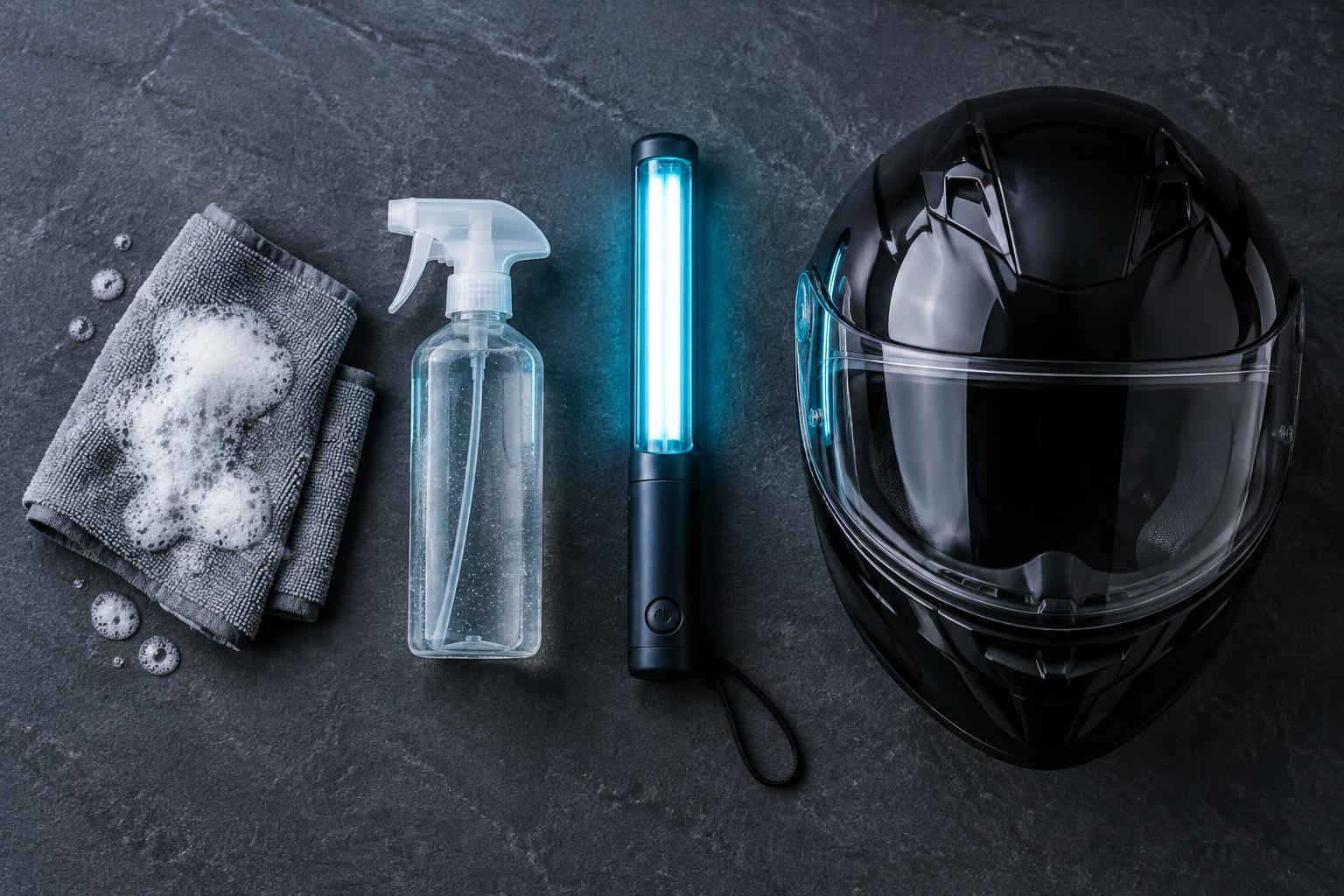
Cleaning physically removes dirt, oils and many germs. Sanitizing reduces microorganisms to defined acceptable levels, while disinfecting inactivates specified microorganisms using a validated treatment.
These processes serve different purposes.
According to the US Centers for Disease Control and Prevention (CDC), cleaning generally involves soap or detergent, water and physical action.
Sanitizing and disinfecting involve additional methods intended to reduce or inactivate microorganisms.
The effectiveness of each process depends on the product, surface, application method and contact time.
Here's what that means for your helmet.
1. Cleaning: Getting Rid of the Grime
Cleaning is the most familiar part of helmet maintenance.
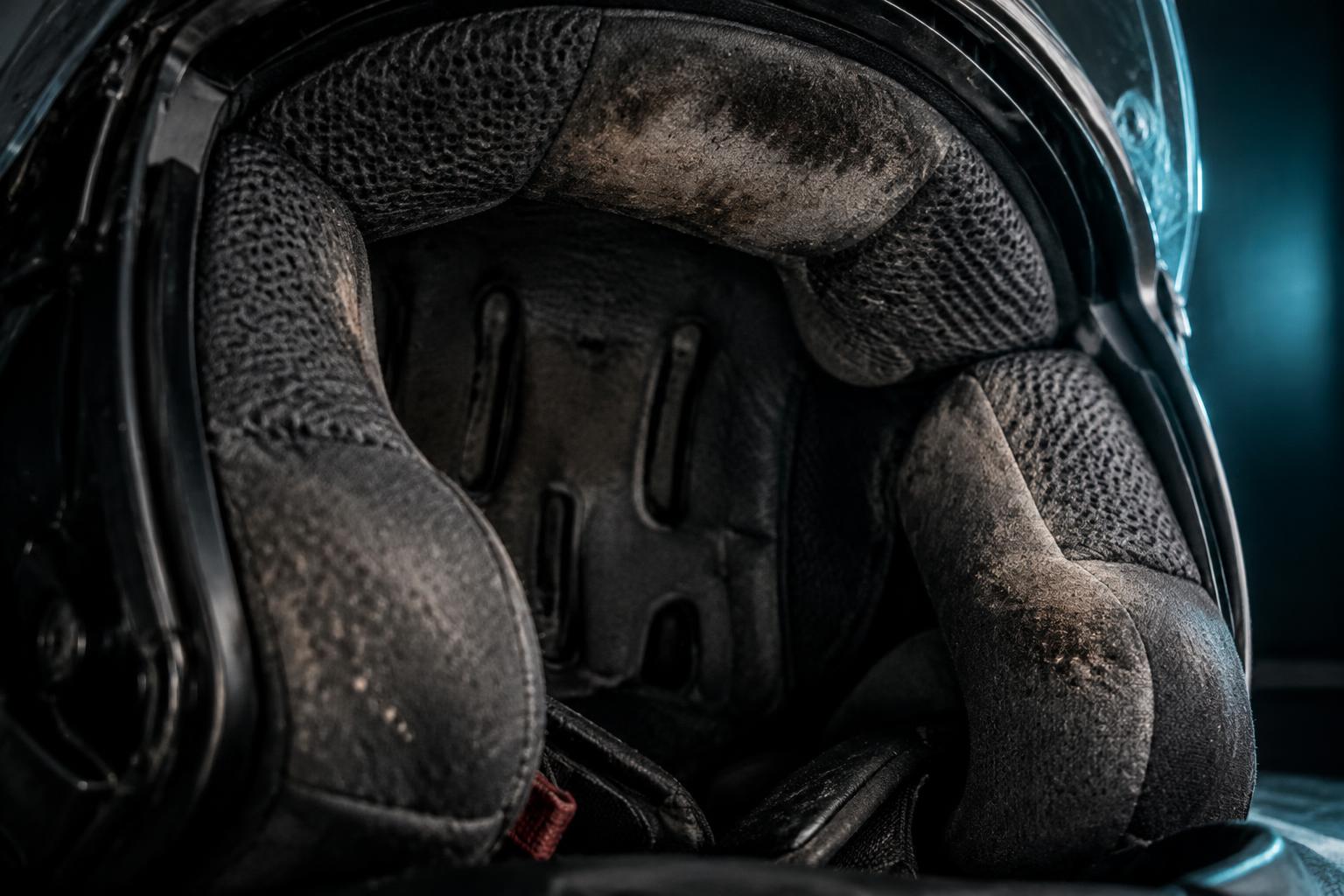
It involves removing visible dirt and accumulated residues such as sweat, skin oils and dust.
For helmets with removable comfort liners, this may involve washing the padding using manufacturer-approved methods.
Fixed padding usually requires a more careful approach.
Cleaning is important because dirt and organic matter can interfere with some sanitizing and disinfecting processes.
The CDC recommends cleaning surfaces before sanitizing or disinfecting them.
In other words, cleaning isn't the boring preliminary step.
It's doing a lot of the heavy lifting.
And despite what some advertisements might suggest, regular cleaning alone can remove many microorganisms from surfaces.
2. Sanitizing: Reducing Microorganisms
Sanitizing focuses on reducing microorganisms to levels considered acceptable under applicable standards or public-health requirements.
Unlike ordinary cleaning, sanitization involves a specific microbial reduction objective.
Depending on the application, this may involve chemical treatments or other validated processes.
However, a treatment described as sanitizing isn't automatically effective against every type of microorganism.
Its performance depends on what has been tested.
For example, a product that demonstrates effectiveness against certain bacteria should not automatically be assumed to eliminate all viruses or fungi.
The exact claims matter.
And when dealing with helmet interiors, there's another consideration: material compatibility.
A treatment suitable for a hard, nonporous surface may not perform identically on fabric padding or within complex helmet interiors.
3. Disinfecting: Targeting Specific Microorganisms
Disinfection is intended to inactivate specified microorganisms on surfaces or objects.
Chemical disinfectants are commonly used for this purpose, although other technologies may also be employed in appropriate settings.
According to the US Environmental Protection Agency (EPA), disinfectant products must meet defined effectiveness requirements for their approved claims.
An important factor is contact time.
A disinfectant may need to remain on a surface for a specified duration to achieve its intended effect.
Wiping it away immediately may reduce effectiveness.
But here's the catch.
A disinfectant that works well on a kitchen counter isn't necessarily safe for your motorcycle helmet.
Helmets contain plastics, adhesives, protective foams, fabrics and other materials that can react differently to cleaning agents.
Some chemicals may cause deterioration or damage.
That's why helmet manufacturers' instructions should always take priority over generic cleaning advice.
Does Sanitizing a Helmet Mean It's Sterile?
No.
And this distinction is particularly important.
Sterilization refers to a much more stringent process intended to eliminate all forms of microbial life under defined conditions.
Routine helmet cleaning and sanitization should not be confused with sterilization.
A helmet described as sanitized should not automatically be considered sterile or completely free of microorganisms.
Similarly, claims such as "100% germ-free" require strong evidence and should be treated cautiously.
Good hygiene doesn't require pretending that the microbial world has disappeared.
What About UV Light and Helmet Sanitization?
Ultraviolet technology is increasingly discussed in connection with surface disinfection.
Certain wavelengths of UV light can inactivate microorganisms when the appropriate dose reaches them.
However, effectiveness depends on several factors, including exposure time, intensity, wavelength and whether the targeted surfaces receive sufficient radiation.
Helmet interiors contain curved surfaces, fabric folds and areas that may be shielded from direct exposure.
Consequently, the presence of UV light alone does not establish a particular level of disinfection.
Any effectiveness claim should be supported by testing under conditions relevant to the actual helmet and treatment process.
It's an interesting technology, but the science deserves more attention than the marketing buzzwords.
Which Method Is Best for Your Motorcycle Helmet?
The answer depends on what you're trying to achieve.
For everyday dirt and sweat accumulation, manufacturer-approved cleaning is essential.
For odour problems, thorough cleaning and complete drying may help address the underlying causes.
Additional sanitization or disinfection treatments may be useful in certain circumstances, provided they're appropriate for helmet materials and their effectiveness has been demonstrated.
The CDC notes that routine cleaning is sufficient in many everyday environments, while additional disinfection may be appropriate in situations involving illness or increased infection risk.
There is no scientific reason to assume that every helmet needs aggressive chemical disinfection after every ride.
And more chemicals don't necessarily mean better care.
Sometimes, less really is more.
Why Proper Helmet Care Matters
A helmet has two jobs worth respecting.
Its primary purpose is protecting your head during a crash.
Its interior also needs to remain comfortable and reasonably hygienic through regular use.
A good maintenance routine considers both.
Using harsh solvents, soaking impact-absorbing foam or exposing helmet components to excessive heat could compromise protective materials.
SHOEI, for example, recommends neutral cleaning agents for suitable components and warns against solvents and heat exposure.
The best cleaning method is one that respects the helmet's construction while addressing its hygiene needs.
Making Helmet Hygiene More Convenient
For many Indian riders, the biggest challenge isn't understanding why helmets need attention.
It's finding the time and convenience to care for them consistently.
This is where services such as Helmio fit into the picture.
Helmio offers automated helmet hygiene and sanitization pods designed to make additional helmet care accessible during everyday routines.
Such services should complement regular cleaning, proper drying and manufacturer-recommended maintenance.
Because helmet hygiene shouldn't be complicated.
But it should definitely be more than a quick spray and a hopeful sniff.
Frequently Asked Questions
Is helmet cleaning the same as sanitization?+
No. Cleaning removes dirt and many microorganisms physically, while sanitization aims to reduce microorganisms to defined acceptable levels.
Can I use household disinfectant inside my helmet?+
Not unless the helmet manufacturer confirms that the product and application method are compatible with its materials.
Is UV sanitization effective for helmets?+
UV technology can inactivate microorganisms under suitable conditions, but effectiveness inside a helmet depends on exposure, coverage and validated performance.
Do I need to sanitize my helmet every day?+
There is no universal daily sanitization requirement. Cleaning frequency depends on usage, conditions and manufacturer guidance.